Pembroke Welsh Corgi Puppies
Raised with love in the heart of Texas
Health-tested • AKC/CKC Registered • Early Training
Get in Touch
Raised with love in the heart of Texas
Health-tested • AKC/CKC Registered • Early Training
Get in TouchFamily-raised, health-focused, and dedicated to the breed we love.
At Larsen Loved Corgis, we are dedicated to raising exceptional Pembroke Welsh Corgis with a focus on health, temperament, and lifelong companionship. Nestled in the heart of Texas, our breeding program is built on integrity, passion, and a genuine love for this incredible breed.
All of our Corgis are AKC or CKC registered and health tested to ensure genetic soundness and overall well-being. We are committed to producing not just beautiful dogs, but confident, well-adjusted puppies that make outstanding additions to family homes.
We believe early socialization and training are key to raising the ideal family companion. That's why we begin foundational training and enrichment at just 3 weeks of age — from early neurological stimulation to crate exposure and basic manners.
As a family of 6, our puppies are raised in a loving, hands-on environment where they receive daily interaction and exposure to the sights and sounds of everyday life. This ensures they leave us friendly, curious, and ready to bond with their new families.
Meet the moms and see who has puppies ready now.
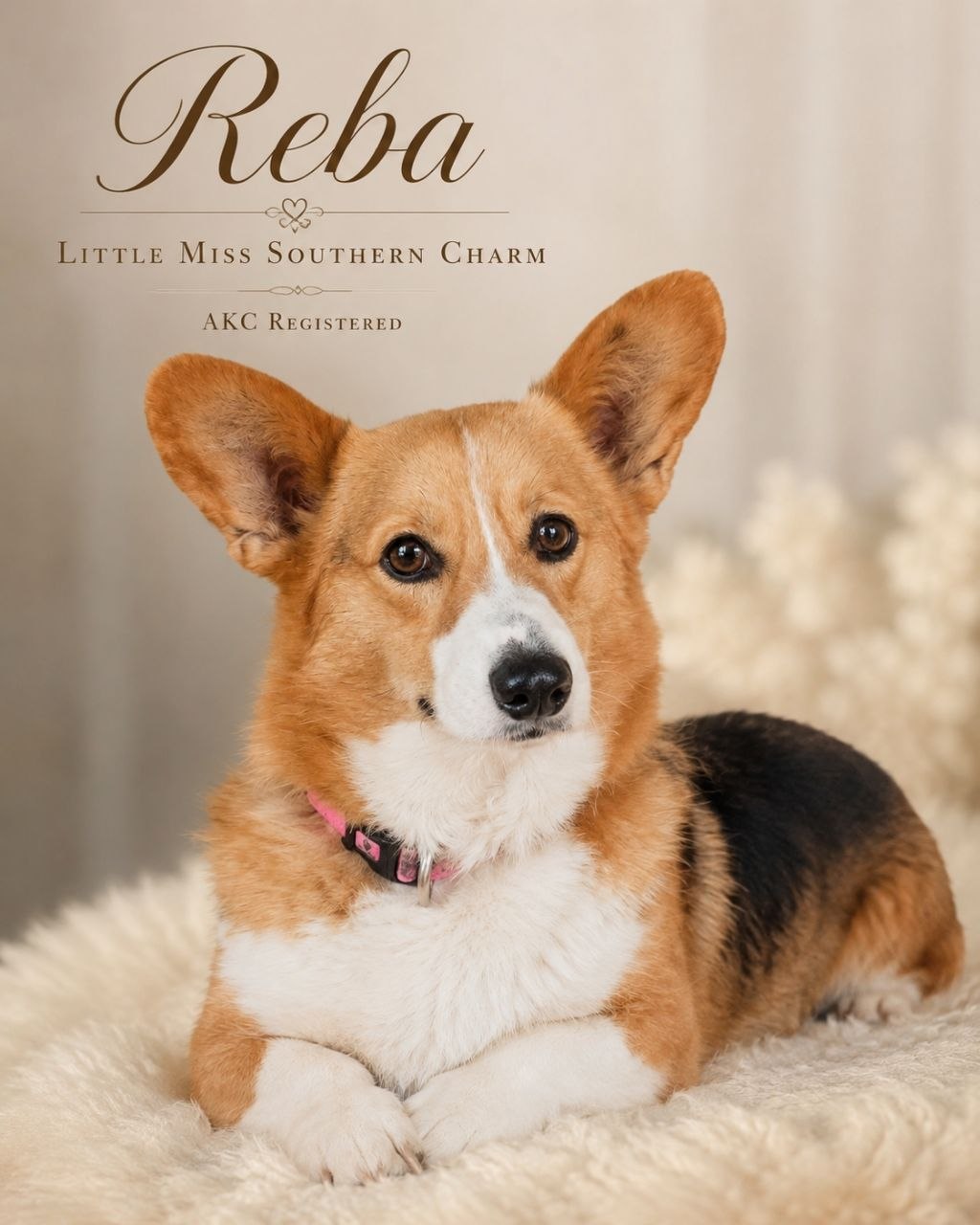
AKC Registered & health tested. 6 puppies currently available in tri-color and sable/fawn — $2,000 each. Reach out below for pickup details.
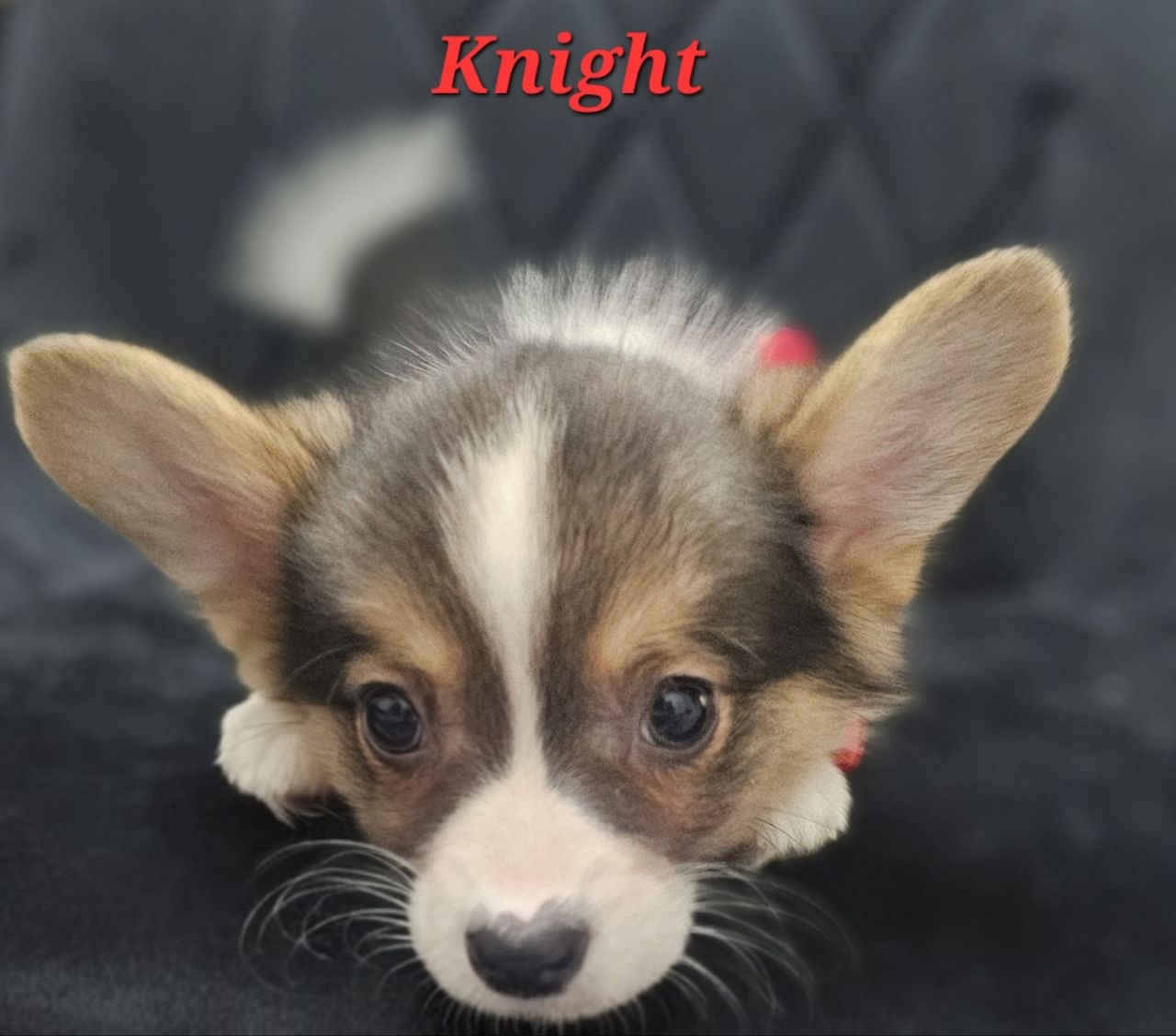
AKC Registered & health tested. Champion bloodlines on both mom and dad's side — mom is an imported Corgi. Puppies born July 2026 — $2,200 each. Reach out below for pickup details.
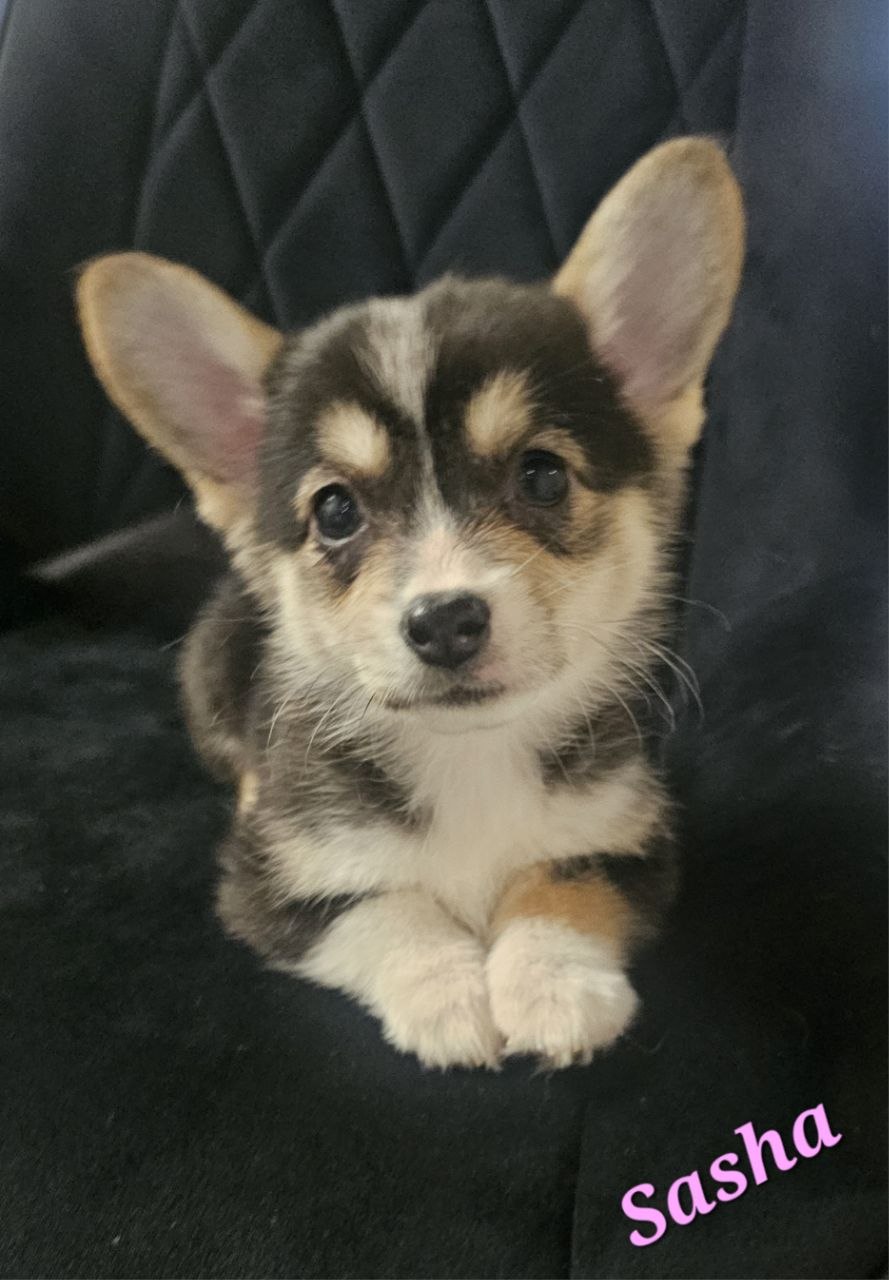
Shimmer, Murdoc, Titan, Sasha, Biscuit & Cheddar — $2,000 each.





We're not here for the money. We're here because we're passionate about what we do.
We believe the foundation for a happy, well-adjusted Corgi begins in the first few weeks of life.
Starting at just 3 days old and continuing through the first two weeks, we use ENS exercises developed by the U.S. military. These gentle handling techniques help improve stress tolerance, cardiovascular health, and immune system. Puppies who receive ENS often grow into calmer, more resilient adults.
Between 3–8 weeks of age, we introduce puppies to a wide range of textures, surfaces, smells, and gentle handling. From walking on different surfaces (grass, carpet, tile) to age-appropriate toys and sounds, we build curious, confident pups.
We gradually expose puppies to common household noises like vacuums, doorbells, thunderstorms, and children playing. These sounds are introduced at low volumes and gradually increased, helping them stay calm in noisy environments.
Our puppies are exposed to people of all ages, including children, and are gently introduced to other friendly adult dogs and cats. They learn appropriate play, social cues, and develop confidence around humans and animals alike.
We begin foundational training around 3 weeks old with gentle name recognition, following humans, and introduction to basic commands like "sit" and "come." By the time your puppy goes home, they have a solid groundwork for future training.
Litter box training starts around 3 weeks of age, teaching puppies to use a designated potty area. This speeds up housebreaking, minimizes accidents, and reinforces keeping their sleeping space clean.
We begin crate training gradually using positive reinforcement, helping puppies associate the crate with calm and safety. We also work on kennel training to prevent separation anxiety when transitioning to new homes.
From an early age we reinforce polite behavior — sitting for attention, no jumping, waiting patiently for food. Our goal is to send home a puppy who already understands respectful behavior.
Transparent, responsible, and thoughtful. We let you choose.
Most people are surprised to learn that almost all Pembroke Welsh Corgis are born with full-length tails. Tail docking is a cosmetic choice — not a requirement. At Larsen Loved Corgis, we believe in being transparent about this decision.
Tail docking has been a tradition in working Corgis to prevent injury in herding environments. Many companion Corgi owners today choose to keep the natural tail — either way, we're happy to support your preference. Just let us know early so we can plan accordingly.
Yes! Our family has 4 children (ages 2–12), and our Corgis love being around kids. We also have cats and other dogs in the home. Growing up with other animals helps them feel comfortable from the very beginning.
However, due to their sensitive immune systems as puppies, we do not expose them to animals or people outside our home until they're ready to meet their new family. We keep them in a well-sanitized area to protect their health.
Yes! Each puppy comes with a limited AKC or CKC registration. Please ask about full registration if you plan to breed your Corgi — full registration has never been sold, so we take those requests seriously.
Standard Corgis: $350 deposit
Long-haired Corgis: $500 deposit
We accept cash, or online payments through Good Dog, Venmo, Zelle, and PayPal. Deposits are nonrefundable to ensure every puppy has a committed home.
Yes! All puppies are up to date on deworming and vaccinations, and in great health.
Almost all Pembroke Welsh Corgis are born with full-length tails. We don't automatically dock tails — it's your choice. See our Tail Policy section for a full explanation.
Thinking about whether a Corgi is the right fit for your home? Here's what to know.
Yes. Corgis have a double coat and shed year-round, with heavier shedding in the late spring and early summer. Weekly brushing (or more often during heavy shedding season) helps manage loose fur and keeps their coat healthy.
Corgis do best with 1-2 hours of activity a day, split between walks and active play. They were originally bred as herding dogs, so it's not unusual for them to try to herd children or other pets around the house.
Adult Pembroke Welsh Corgis typically weigh 25-30 lbs. Despite their short legs, they have a longer body shape and a sturdy, medium build.
The average lifespan is 12-13 years. Good nutrition, regular exercise, routine veterinary care, and keeping your Corgi at a healthy weight all help them live toward the longer end of that range.
Corgis are intelligent and eager to please, and they make wonderful first dogs for plenty of families — they're just independent enough to keep training sessions interesting. Early puppy classes and consistent positive reinforcement make a big difference — our early foundational training (see our Training section) gives every puppy a head start.
Because of their long backs and short legs, Corgis are at higher risk for intervertebral disc disease (IVDD), affecting an estimated 15% or more over their lifetime, most often between ages 3-6. Signs include reluctance to jump, back or neck pain, or trouble with stairs. Early treatment matters most — IVDD doesn't have to shorten a Corgi's life when it's managed well. Keeping your Corgi at a healthy weight and limiting rough jumping on and off furniture can help lower the risk.
Yes, Corgis can do well in apartments as long as they get their daily walks and playtime. Because of their long backs, it's worth using pet stairs or ramps to help them on and off furniture or beds rather than letting them jump.
Why we genetically test every dog in our program, and how it keeps our puppies healthy.
Every dog in our breeding program is genetically tested before they ever have a litter. Three of the most important tests we run for Pembroke Welsh Corgis screen for Degenerative Myelopathy (DM), Exercise-Induced Collapse (EIC), and Von Willebrand Disease Type I (vWD1) — all conditions with a known genetic cause in the breed. Here's what each one is, and how responsible testing prevents them from being passed on.
DM is a progressive spinal cord disease that shows up later in life, usually between 8 and 14 years old, starting with a loss of coordination in the back legs. It's similar to ALS in humans and is caused by a mutation in the SOD1 gene. It's an inherited (recessive) condition, meaning a dog needs two copies of the mutated gene to actually develop it.
EIC is an inherited neuromuscular condition that causes otherwise healthy-looking dogs to lose muscle control or collapse after intense exercise or excitement. It's usually identified before 2 years of age and, like DM, is a recessive condition requiring two copies of the mutated gene to affect a dog.
vWD1 is a genetic bleeding disorder caused by a deficiency of von Willebrand factor, a protein needed for normal blood clotting. Dogs with vWD1 can bleed excessively after an injury, surgery, or even something as routine as a spay or neuter. It's also recessive, requiring two copies of the mutation to be clinically affected.
Since all three conditions are recessive, a dog's genetic test comes back as one of three results: Clear (no copies of the mutation — cannot pass it on or be affected), Carrier (one copy — won't show symptoms, but can pass the mutation to puppies), or Affected (two copies — will develop or has the condition).
Responsible breeders test every dog before pairing them, and pair carriers only with clear dogs — never carrier to carrier, and never with an affected dog. We breed both clear-to-clear and clear-to-carrier pairings. A clear-to-carrier pairing can still produce carrier puppies, but it can never produce an affected puppy, since an affected puppy needs two copies of the mutation. Our puppies go home as pets without breeding rights by default, so a carrier result isn't a health concern for the puppy itself. For families who want breeding rights, that's available under the right conditions for an additional fee, and we're always transparent about each individual puppy's own test results. This is why genetic testing, not guesswork, is what actually keeps a breeding line healthy generation after generation.
Our stud, Royal, is triple clear for DM, EIC, and vWD1. We test every dog in our program before breeding and are always happy to share health testing results with our puppy families.
Whether you're looking for a loyal sidekick, a family companion, or a show prospect — we'd love to hear from you.